Wybrany utwór: Sezon Kulturalny Polska-Rumunia 2024-2025
O współpracy kulturalnej między Rumunią a Polską, a także koncertach podsumowujących kończący się właśnie Sezon Kulturalny Polska-Rumunia 2024-2025 w rozmowie z Katarzyną Sanocką opowiada Ovidiu Dajbog-Miron – rumuński manager kultury, tłumacz przysięgły, dyrektor Rumuńskiego Instytutu Kultury w Warszawie.
Początki stosunków dyplomatycznych między Polską a Rumunią sięgają 1919 roku. Ponad sto lat później, te relacje są wzmacniane dzięki pierwszemu Sezonowi Kulturalnemu Polska-Rumunia 2024-2025. W czasie 17 intensywnych miesięcy współpracy kulturalnej odbyło się ponad 500 wydarzeń artystycznych, z czego aż 300 w Polsce. To przedsięwzięcie udostępniło zarówno artystom, jak i instytucjom unikalną przestrzeń do tworzenia nowatorskich pomysłów i poznawania się nawzajem.
„Mamy wspólny język” to hasło przewodnie, które nadawało ton całemu Sezonowi. – Słowa nie były aż tak potrzebne, bo to muzyka i sztuka stały się uniwersalnym językiem, który łączył i był zrozumiały dla wszystkich, niezależnie od pochodzenia – mówi Ovidiu Dajbog-Miron.
Tegoroczna 7 edycja Międzynarodowego Festiwalu Muzyki Europy Środkowo-Wschodniej Eufonie także włącza się w tworzenie więzi między Polską i Rumunią, i prezentuje kulturę rumuńską od strony muzycznej. W programie znalazły się koncerty z utworami wybitnego kompozytora George’a Enescu – usłyszy je publiczność w Warszawie i Krakowie, a także Bukareszcie – będzie to pierwszy koncert zagraniczny pod znakiem Eufonii.
Program Sezonu Kulturalnego Polska-Rumunia 2024-2025 jest realizowany dzięki współpracy Instytutu Adama Mickiewicza, MKIDN oraz Instytutu Polskiego w Bukareszcie z rumuńskim Ministerstwem Kultury oraz Rumuńskim Instytutem Kultury. Dofinansowano ze środków Ministra Kultury i Dziedzictwa Narodowego.
Dzień dobry Państwu, Katarzyna Sanocka. To są audycje kulturalne.
W 2025 roku mija 70 lat od śmierci wybitnego rumuńskiego kompozytora Georgia Enesku.
Z tej okazji Międzynarodowy Festiwal Muzyki Europy Środkowo-Wschodniej Eufonie oddaje hołd temu wybitnemu twórcy
między innymi koncertem zatytułowanym Podróże Enesku Dworek w Filharmonii Narodowej w Warszawie.
W audycjach kulturalnych porozmawiamy o fenomenie muzyki Enesku, a także o rumuńsko-polskiej współpracy kulturalnej.
A naszym gościem jest Ovidu Daszbok-Miron, dyrektor rumuńskiego Instytutu Kultury. Dzień dobry.
Dzień dobry, dziękuję za zaproszenie.
Welcome, I'm glad to have you here.
First of all, the concert in National Philharmonic in Warsaw is some kind of culmination of the Romanian Poland-Poland-Romanian cultural season.
It was the first season connecting Poland and Romanian culture.
So, how would you assess this season?
Yes, indeed.
The concert on the 1st of December is going to be the last of a series of concerts that will summarize this bilateral season.
The same program as we will have on the 1st of December in Warsaw, it will also be played in Krakow the day before, at the Philharmonic in Krakow.
And this is actually the event that closes officially the bilateral season.
Indeed, this has been the first ever bilateral season between Poland and Romania.
And we are very happy that actually, we call it a season, but it's one year and a half.
So, it's basically six seasons.
17 months, yes.
Exactly. So, it is an intense time of collaboration between the two countries.
I would say that there have been almost or more than 500 events that took place both in Poland and in Romania that were organized in Poland by the Romanian Ministry of Culture and the Romanian Cultural Institute,
while in Romania by the Polish partners, the Ministry of Culture and National Heritage, Institut Adama Mickiewicza, and the Polish Institute in Bucharest.
So, if I am to talk about the Romanian events in Poland, we had over 300 events in 13 Polish cities.
So, it has been at a great scale, but I'm not going to focus so much on the figures, but I would like to focus more on the significance and the way we worked during this season.
What was important for us was to build an organic way of programming, meaning that we wanted to have projects that would bring together artists and institutions from both countries
that would create something new or regional at the meeting point, at the nexus between the two cultures.
Of course, it has not been the case with all the programs, but there have been many co-productions, as we call them, that have been very successful.
And I would like to name a few.
The first one in the field of contemporary dance, together with the Polish Theatre of Dance from Poznań,
we invited three Romanian choreographers, who worked during workshops and residences for almost half a year with the ensemble from the theatre in Poznań.
And they created a new original piece, which is a kind of a triptych, if I may use this visual arts term,
in which they explore the idea of a nation today.
What is our relation with our countries, with our national identities?
What are the stereotypes about our nations?
And this has been a great effort and a great performance that was premiered last year, in December.
And this year toured Romania.
It was already in five, it was already in three cities at the International Theatre Festival in Sibir,
which is the largest theatre festival from Romania, but also in Bucharest and in Dimishwara.
So this is a kind of example in which actually we create something new.
We start from zero and we bring artists together and let creativity decide in which direction it goes.
And the same happened with another co-production between Dagadana, which is a very well-known band in Poland,
and Subcarpac, which is a very, very well-known band in Romania.
So they both dig into the deeper roots of the folk music,
but they give it a contemporary expression in which jazz and rock and hip-hop and electronic music meet together.
And the result was a single that has been already published.
And it's now you can hear it on Spotify and on all these streaming platforms, which is called Moja Mamo.
And what is interesting, because here, of course, you have the collaboration between the Polish and the Romanian artists,
but also Ukrainian artists, because Dagadana is a group made of both Poles and Ukrainians.
And I think this has a very important role, because beyond the language of music,
it also tells us about the contemporary situation in which we are, with the war happening at our borders,
and how important this solidarity is between our peoples and music.
It's a universal language that says it all.
The program of concert includes the Romanian Rhapsody, first Romanian Rhapsody.
What does this piece mean to you?
And what do you find in Giorgio Ionesco music?
For us, it means that we have similar historical, up to a certain point, of course,
similar historical past and experiences that have shaped our way of thinking,
our way of seeing the world around us, which is very similar.
And actually, we don't need too many words, because actually we understand each other in many fields without saying more.
So we share a common language, a deeper language of understanding of our historical experiences,
but also, of course, the artists, they speak the same language, the language of culture and of art.
And yes, this is another shared language.
And I would like to add also a few details about how we got to this slogan,
which is connected with our logotype.
We organized with the University of Art from Warsaw and the University of Art from Bucharest,
a competition in which we invited students from both countries to bring ideas of how the logo and the slogan should sound like,
based on their understanding of Poland and Romania.
And it was a great experience, because we had many meetings, there was an inner competition,
and then one of these motors were selected.
And we are very happy that the students came up with this idea of the diacritics that are specific for both Polish and Romanian language.
And basically, these diacritics and the logotypes, they are put into dialogue.
So we have specific diacritics that are put into dialogue between the two countries.
And this is how, actually, as I was saying before, we try to work, to bring people together,
to think upon what is common to our cultures and create something new.
And actually, I have to say that we are working with the students,
we continue to work with the students that won this inner competition on our graphics and design.
So I'm very happy that there's something that is developing.
The final concert will take place in Warsaw Philharmonic, first day of December.
It's a very important date for a Romanian history. Why?
Yes, it's a very important date.
It reminds the date of 1st of December 1918 and the Union of Greater Romania.
So after the Paris Conference, after the First World War,
the regions in which the Romanians were the majority of the population,
but were part of different empires, as was the world built at that time.
So they decided through different referendums and decisions of the parliaments to join Romania.
And this is how Greater Romania, the Kingdom of Greater Romania, was formed in 1918.
And this is the day that we celebrate on 1st of December.
The program includes the first Romanian Rhapsody by Giorgio Anesco.
So what do you find in his music and in this particular piece?
For Romanians, the first Rhapsody is probably the most iconic piece of classical music in Romania.
All the Romanians, Hamid, they know it.
And it's simply iconic.
And it is like this because it is a piece of music which is deeply rooted in the folk traditions of Romania.
And Romanian dances also.
And especially, exactly, especially Romanian dances.
Because actually, Giorgio Anesco sublimated a series of Romanian dances,
but also music that was circulating among Loutar, which is a term which is quite difficult to translate.
So there were professional musicians that would play on different occasions.
Many of them, like the majority of them, were Roma.
And they would combine different melodies and rhythms into a music which is improvised with a lot of virtuosity.
So you would have both, you know, folk themes, but also Roma rhythms, Roma music rhythms,
Western influences, type of, you know, Ottoman music that would circulate in the area.
And the result was something very vivid, very energetic, but also very, I would say that this improvisation was an important aspect in this virtuosity.
And this is what we see also in the rhapsody.
So I highly invite you to come and listen to this because it's very vivid, very energetic.
You will have the urge to dance immediately.
And I am very happy that this will be in Warsaw.
So also, actually, we have to say that there are four concerts that are under the auspices of Eufonie,
because a similar program with Anescu and Dvořák will be played in the Romanian Athenaeum on the 28th of November,
under the auspices of Eufonie.
And this is an important milestone for Eufonie, because it's the first international collaboration.
So first time Eufonie travels abroad, and it does it to Bucharest.
And then on the 29th of November, here in Warsaw, the National Philharmonic Orchestra and the choir of the orchestra
will interpret Enescu's poem Rummen, Poemat Rumunski, which is his first symphonic work.
Very, very much rooted also in the Romanian culture.
And at the time was dedicated to the royal family of Romania.
Anescu was only 16 when he composed this.
And actually, he was a prodigious musician like Mozart and other prodigious musicians.
And for instance, the first Rhapsody, Romanian Rhapsody No. 1, was composed when he was 19.
So I'm happy that we will hear Enescu, we will hear his first works.
But of course, Enescu has become a great musician of the 20th century.
Also, thanks to his symphonies, to his sonata and to his opera, Oedip, which of course have been shaped during time.
And his stylistics has been shaped by the international influences as well.
And he has a very deep and complex music.
And sometimes, actually, the violinists and musicians, they approach with quite some anxiety the works of Enescu
because they are very complex and they have many, many nuances.
And they have a depth which sometimes is not very easy to capture.
And that's why for some time Enescu has not been played so much.
But now we actually, we have a revival of Enescu music.
And I'm really happy that Euphonie will host this.
This first season was really amazing.
What about the future?
Will this collaboration between Romania and Poland, culture collaboration, will be continued?
Yes, it will be continued.
I have to say that Romania and Poland, they have a great tradition of cultural collaboration
that comes from a long, long time.
I'm not going back too long into history, but I'm just going to mention that in the 20th century,
in the interwar period, there were excellent relations between Romania and Poland.
And actually, we shared a border of 350 kilometers.
So we were very close and very dear neighbors.
And just as an anecdote, there was a decision to open Polish institutes abroad and Romanian cultural institutes abroad.
And the first ever Polish institutes abroad opened abroad was in Bucharest in 1937.
And for instance, Romanian has been a language of study at the university, Jagiellon University from 1921.
And there were many cultural exchanges in that period as well.
And now, after the communist times and after the transformation, which was quite hard for both Poland and Romania,
in which both countries, they focused on their accession to the European Union,
and are more culturally, let's say, focused on rebuilding the bonds with the West.
Now, actually, we are coming back to our region and we are deepening our relations.
And we somehow go back to this emotional capital that used to be between our countries.
And this, for instance, the Romanian Cultural Institute has been present in Poland for 20 years.
Next year, we will have our 20-year celebration.
And much has been done during this time.
The Romanian literature is very well known and translated.
The cinema, the music in all the fields, there have been tremendous improvements.
And after the season, which was like, you know, like a firework.
Explosion.
Exactly, like an explosion of events for almost two years, in fact.
The philosophy of the season was to organize as many sustainable projects as possible
to bring artists and institutions and organizations together
and to deepen this relationship in order to have other projects coming after this season.
So, for instance, next year, this project on music,
which has started this year,
a collaboration between the jazz band Bwoto from Poland
and future Nuggets from Romania,
next year we will have, like in the case of Dagadana and Subkarpats,
some new pieces that will result from their collaborations
and they will tour both Romania and Poland.
The professionals and the artists that worked for the logotype
will continue to explore this graphic connections between our cultures
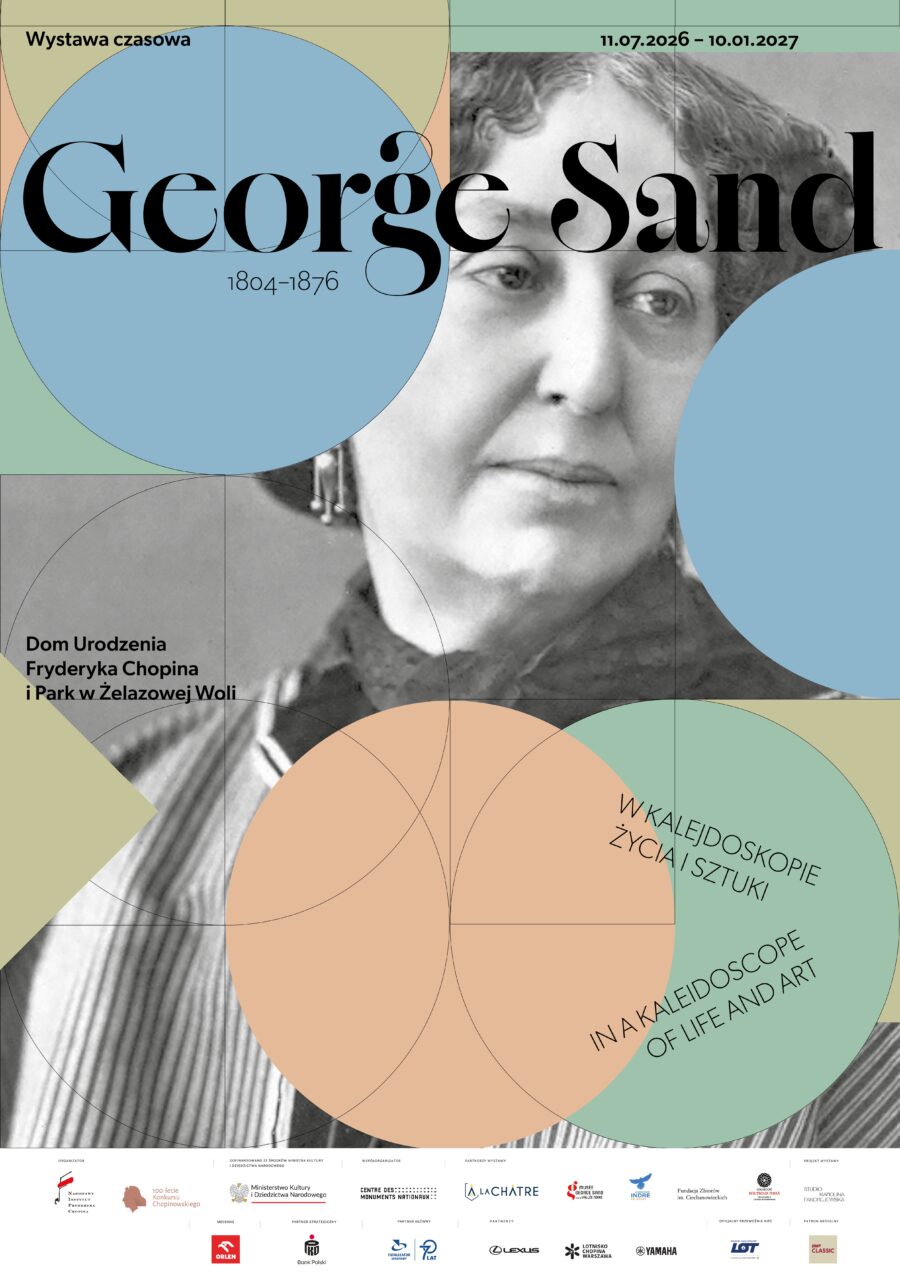
Na wystawie pt. „George Sand (1804-1876). W kalejdoskopie życia i sztuki” zgromadzono unikatowe pamiątki związane z Artystką, które przekonują, że była wszechstronną humanistką, w wielu kwestiach wyprzedzającą swoją epokę. Celem twórców ekspozycji było przedstawienie Sand, jako kobiety wielu zainteresowań, pasji i talentów, która niezasłużenie jest przedstawiana przede wszystkim jako „partnerka… Czytaj dalej o Idea, twórczyni, kobieta – wyjątkowy portret George Sand w Żelazowej Woli
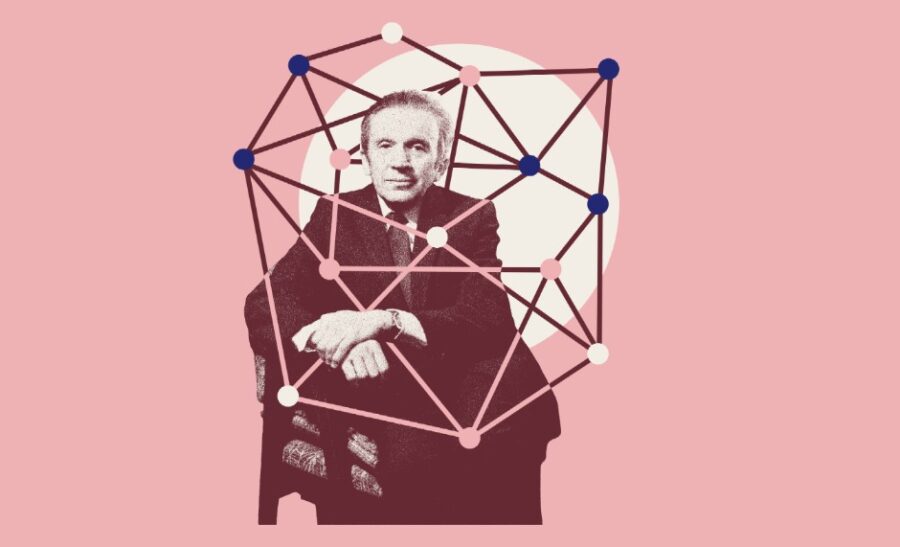
Interaktywna, dwujęzyczna mapa pozwala poznać skomplikowaną biografię oraz twórczość Mieczysława Wajnberga, jednego z najwybitniejszych kompozytorów XX wieku. Uniwersum będzie rozwijane, w miarę dalszych ustaleń dotyczących jego życiorysu. Mieczysław Wajnberg był kompozytorem polsko-żydowskiego pochodzenia. Urodził się w Warszawie, gdzie wraz z rodzicami i siostrą mieszkał w kamienicy przy ul. Żelaznej 66. Czytaj dalej o „Wyciąganie historii z pamięci”: Uniwersum Wajnberga
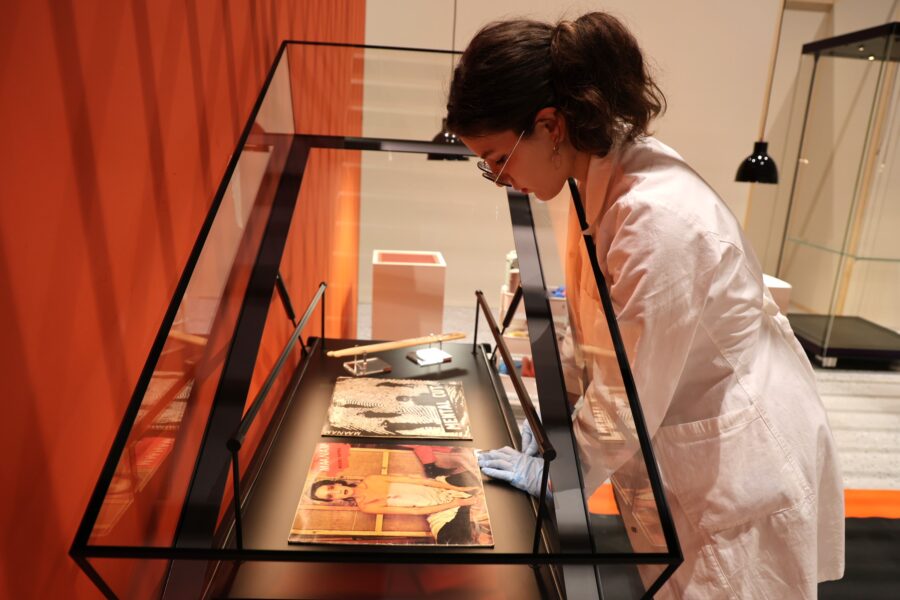
Najnowsza wystawa w Muzeum Historii Polski przybliża muzykę rozrywkową lat 1944-1989, skupiając się nie tylko na najważniejszych wydarzeniach ze świata sztuki. Twórcy pokazują też, jakie funkcje muzyka pełniła w życiu Polaków i w jaki sposób próbowały ją wykorzystywać ówczesne władze. Ekspozycja „Za czym kolejka ta stoi? PRL w muzycznym zwierciadle”… Czytaj dalej o „Muzyka była sposobem reagowania na świat” – PRL w muzycznym zwierciadle
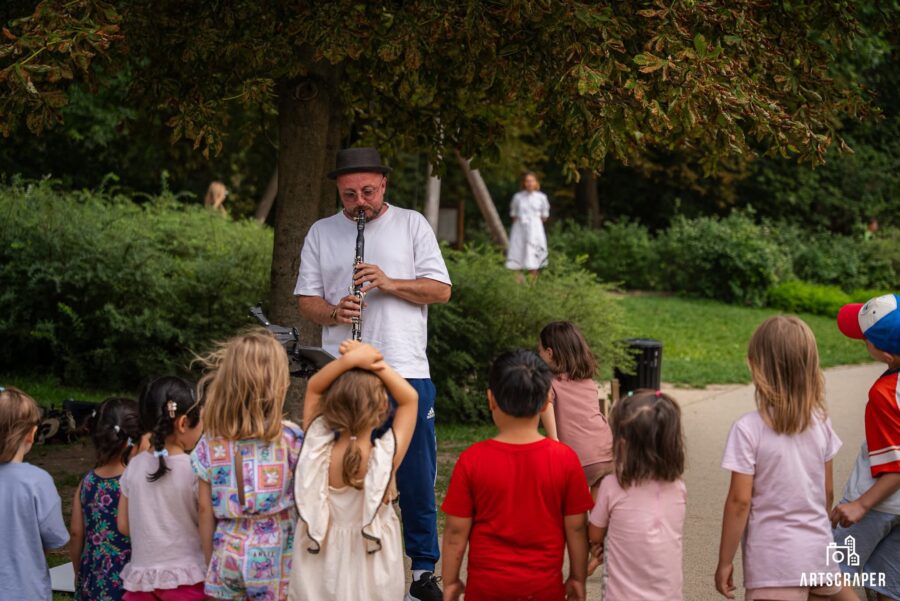
Muzycy zamiast na scenie filharmonii pojawiają się na placach zabaw, skwerach, przy piaskownicach. W ten sposób spotykają się z nowymi odbiorcami muzyki klasycznej „u nich”, w najbardziej naturalnym dla słuchaczy kontekście. I pokazują, że ten rodzaj sztuki nie musi onieśmielać. Ogólnopolski projekt „Bach w piach” – cykl muzyczno-edukacyjnych flashmobów w przestrzeniach… Czytaj dalej o „Bach w piach”: muzyka wychodzi z sal koncertowych
Tadeusz Miller – pieśniarz powojennego Szczecina Słuchacze mylili go z Mieczysławem Foggiem, on sam cenił twórczość Binga Crosby’ego. Choć płyty z wykonywanymi przez niego tangami sprzedawały się w tysiącach egzemplarzy, przedwczesna śmierć sprawiła, że Tadeusz Miller na całe dekady został zapomniany. Zmienia się to m.in. za sprawą poświęconej mu… Czytaj dalej o Król Tanga
Nowa wystawa w Filharmonii Łódzkiej poświęcona jest niezwykłej relacji jej patrona z rodzinnym miastem. Przywołuje początki jego muzycznej drogi, prezentuje też artystyczną aktywność w mieście swojego urodzenia, w którym koncertował aż 34 razy. Nazywany królem pianistów i obywatelem świata, podziwiany i oklaskiwany na obu półkulach, wspominając lata artystycznej kariery, wydarzenia,… Czytaj dalej o „Wszystko się tu stało” – Łódź Artura Rubinsteina